Talk n Listen

Mastering Relationship Conflict Resolution: 5 Proven Strategies
Charisse Swart
Ever felt like you're walking on eggshells in your relationship? You're not alone! A staggering 44% of couples report experiencing high levels of conflict in their relationships. But here's the kicker – conflict isn't inherently bad. It's how we handle it that makes all the difference. In this guide, we'll dive into the art of relationship conflict resolution, equipping you with the tools to turn arguments into opportunities for growth and connection. Ready to transform your relationship? Let's get started!
Understanding the Root Causes of Relationship Conflicts

• Common triggers for relationship conflicts
The trigger for conflict can stem from various things, past experiences, personality, and individual insecurities. Each couple has to work out for themselves what their triggers are and communicate these with one another. This will require you to be vulnerable. I know it can be hard to share your insecurities; it is embarrassing sometimes.
• How backgrounds and experiences influence how we handle conflict
Each person comes from a different upbringing which influences the way they act. The cultural background also plays a role on how you handle conflict.
I came from a house where things weren’t dealt with upfront. Most of the time the issue would be ignored until it goes away.
On the other hand, my husband comes from a household where conflict was a constant occurrence. We had to find our own rhythm on how we were going to handle conflict in our marriage.
• External stressors
In a perfect world, I would like what we are going through in our daily lives not to influence our mood. But it does! The busyness of life takes its toll on how we respond to our partners. I know when I have had a long day, I am not the most patient with my husband and I communicate this with him. I give him a friendly warning, letting him know he should be patient with me and that it is not the time to stir. A little extra love helps in these times.
There are times when I need to be patient with my husband. I know at the end of the month he has deadlines at work and it is tiring. I try not to ask too much or bug him, he needs some space to process and rest.
• How unmet needs and expectations fuel conflict.
We all have expectations we want to be fulfilled. It could be something as simple as hanging the towel on the rail after a shower.
This seems small, but if the expectation is left unmet it causes resentment in your heart. If you do not communicate these expectations how will your partner know? Maybe they were raised in a home where the towel was hung up for them.
Never assume your partner knows your needs and expectations. If it is not addressed in a conversation the claims aren’t valid. Yes, it can stir up dissension if left unaddressed. So, communicate these before your heart is filled with resentment.
The Importance of Effective Communication in Conflict Resolution

• Active listening
The act of active listening is simple, not necessarily easy.
Be fully engaged in the conversation without thinking of other things. Show empathy. Listen to understand and not respond.
It isn’t always called for to deliver your opinion on an issue your partner is discussing with you. Sometimes all that is needed is to be heard.
• The power of the “I statement”
I statements are really easy. When you are talking with your partner about something that is bothering you, start with, “I feel taken advantage of when I have to do all the work around the house”. Blaming them by saying something like, “You are lazy and you expect me to do all the work around the house.
In essence, you are saying the same thing, but you are expressing your feelings with the “I statement” rather than blaming your partner. It changes the attitude of the conversation.
• Non-verbal communication during conflicts
When you are in a conflict situation it is important to keep in mind what your body language is saying to your partner.
Having crossed arms and legs shows you are blocking out anything your partner has to say. The look on your face can spark more angry feelings.
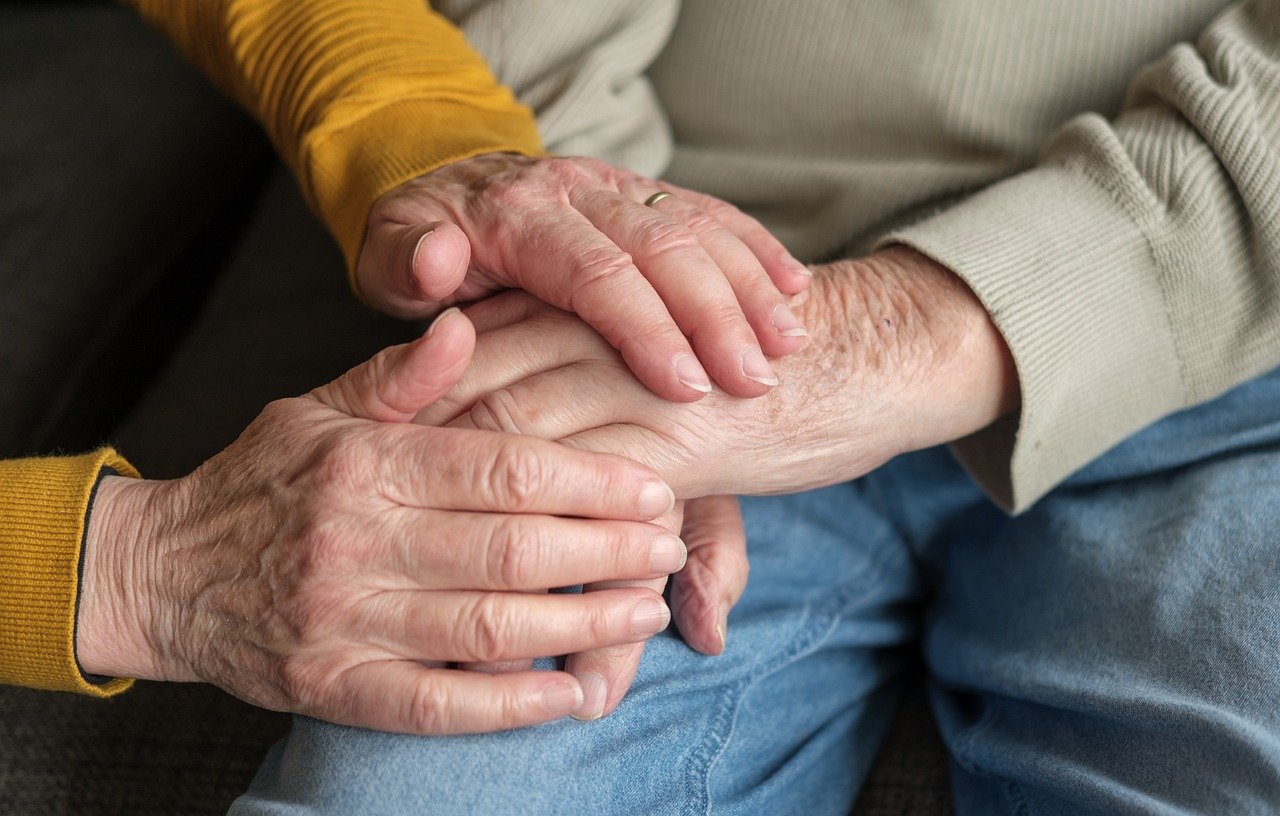
Sitting near your partner and gently holding their hand during the conversation can lead to openness. It tells your partner you and interested in hearing what they have to say, you want to fight for them, not with them.
• Communication pitfalls to avoid during conflict
Pitfalls to avoid during conflict and most other times too.
-Blaming your partner.
-Listening to respond and not understand.
-Bringing up past mistakes or conflict situations.
-Not taking responsibility for the role you had in the conflict.
This is an Amazon Affiliate Link, I might earn from qualifying purchases.
Developing Emotional Intelligence for Better Conflict Management

• Emotional intelligence
Emotional intelligence (EI) is having the ability to manage both your emotions and sense the emotions of others.
The reason why it helps if you are emotionally intelligent is you can keep your emotions in check before they get out of hand. You also have a better understanding of what you are feeling.
You are able to show empathy towards your partner and give them the emotional support they need. People with EI have good people skills.
• Recognizing and managing one's own emotions
Becoming self-aware is a process, for some, it comes more naturally than for others. An exercise you can do to recognize what you are feeling is looking back. Sit down and think of past experiences, good or bad. Sometimes to label things as we like or dislike them, but are unable to put an emotion to them. Write down those experiences and try and name the emotions you felt at that moment. This will help you name the emotion you are feeling now.
• Empathizing with your partner's perspective
Showing empathy requires to you put your own feelings on the shelf for a while and only try to understand what your partner is telling you and their feelings. You don’t have to feel the same as they do, just understand why and how they feel.
Make eye contact with your partner, this shows you care.
If you don’t understand something repeat it back to them. This shows you are listening to what they are saying.
Proven Techniques for De-escalating Heated Arguments
• Using a “time out”
When a conflict situation gets too heated it is time to have a time out, a pause in the discussion. After a set time and once the emotions have calmed come back and revisit the issue.
The reason this can be helpful is when your emotions are heightened your brain gets blocked, not able to think rationally. This is the time when this is said that should rather have stayed. The break gives you time to think clearly again and you can have time to sort through all the words and feelings in your head.
Remember, this is a pause not a stop. You have to come back and continue the conversation.
• The importance of staying calm and avoiding personal attacks
Staying calm is as simple as taking a few deep and intentional breaths. With every breath you let out release some of the tension you are holding in. This is scientifically proven to help. When you are tense the blood carrying oxygen to your brain is restricted and your brain needs oxygen to think properly. When you take deep breaths you are returning the oxygen to your brain.
Words spoken to you can be forgiven, but they are hard to forget. Any name-calling or personal attacks leave scars.
• Explore the "softened startup" approach to addressing issues
By using a soft tone and choosing words carefully, you can reduce defensiveness and increase receptiveness. This method involves starting with an "I" statement rather than an accusatory "you" statement. For example, instead of saying "You always leave dirty dishes in the sink," one might say "I feel frustrated when I see dishes piling up." It's about framing the issue as a shared problem to solve together, not an attack. The softened startup can lead to more productive discussions and better outcomes in relationships. It requires practice but can significantly improve communication.
Finding Win-Win Solutions Through Collaborative Problem-Solving

• Compromise vs. Collaboration
Compromise and collaboration are distinct approaches to problem-solving and conflict resolution.
Compromise often involves each partner giving up something to reach a middle ground. It takes more time and effort to find a compromise that works for both partners.
In a compromise, you might split a cake in half; in collaboration, you'd bake two cakes. Compromise can be useful for minor issues or when time is short. Collaboration is ideal for important decisions or complex problems. Both have their place in relationships and negotiations.
• Brainstorming solutions together
I find after my husband and I have had a conflict situation I will ask him how I can handle the situation better. The feedback he gives me helps me choose my actions and approach to issues better in the future.
• The importance of focusing on shared goals and values
In the society we live in today we are taught to be self-focused. What can you do to get ahead in life? But, in relationships, we have to have common goals and values to work towards. Our own selfish ambitions are left to things that don’t have a great influence on our relationship.
What we focus on grows.
Navigating relationship conflicts doesn't have to feel like walking through a minefield! By mastering these conflict resolution strategies, you're not just solving problems – you're building a stronger, more resilient partnership. Remember, it's not about avoiding conflicts altogether, but about facing them head-on with empathy, understanding, and a willingness to grow together. So, the next time you find yourself in a heated moment with your partner, take a deep breath and see it as an opportunity to deepen your connection. After all, the couples who argue well are often the ones who stay together. Ready to transform your conflicts into stepping stones for a happier relationship? The power is in your hands!
Hi, I am Charisse Swart
Greetings, lovely readers! I am delighted to connect with you through the shared spaces of our digital world. As a dedicated homemaker, my days are woven with the threads of familial love, nurturing, and the subtle art of creating a haven within the walls of our humble abode.
While I occasionally attempt to don the cloak of logic, my dear husband often lovingly nudges me back to the realm of my true nature - that of a relational soul. You see, I possess a heart that thrives on connections, cherishing the intricate tapestry of relationships that grace our lives.
My journey is fueled by an unwavering passion for fostering flourishing bonds between people. There's an innate joy that blooms within me when I witness the beauty of heartfelt connections, the kind that endure the tests of time and adversity.
Yet, amidst the beauty, there exists a poignant ache within me when I see marriages falter, falling short of their boundless potential. It is this very longing for the realization of every relationship's full splendor that propels me forward, seeking understanding, insight, and perhaps, a touch of wisdom to share along the way.
Thank you for joining me on this adventure. May our shared exploration illuminate the path toward deeper understanding, compassion, and the boundless possibilities that lie within the embrace of genuine relationships.


