Talk n Listen
Different Ways To Communicate
Charisse Swart

There are a couple of main ways that we can communicate. Each of these has subsections that we are going to explore in more depth. You will learn the different communication styles as well as how each of these plays a role in our everyday lives. These different types of communication are namely verbal and non-verbal. Experts have done many studies around this subject and yet we still have not mastered it completely. I am going to help you get on the right track to start having healthier conversations. I am especially going to be focusing on communication with your partner, for this is one of the most important relationships in society. If all marriages worked the way they should there would be a lot less misery and heartache. Fatherless homes lead to crime and a whole lot of other issues. I am going off topic here a little, this is because I am passionate about people having good relationships. If we can sort out our communication the world will be a better place.
Verbal communication
Oral:
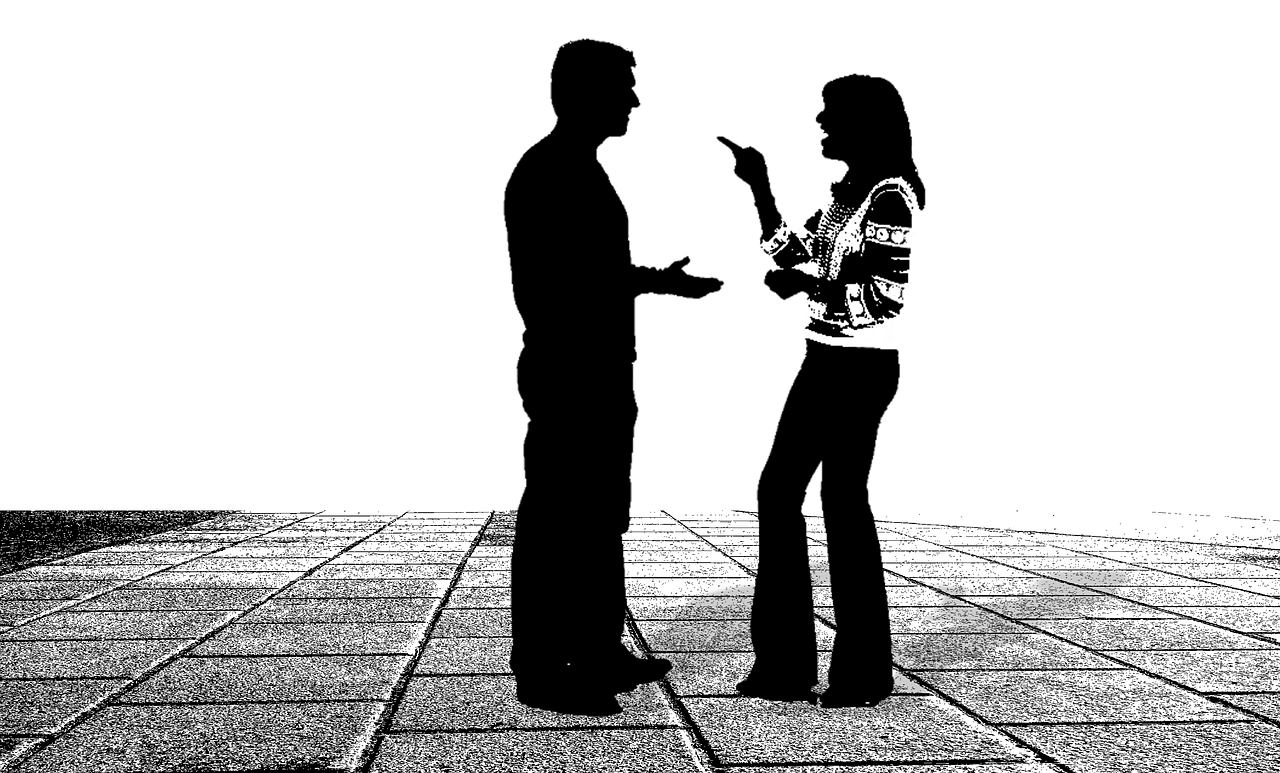
Speaking with the use of words is usually the first thing we think of when we think of communication. We use it daily, when we answer the phone, when we go to the shops and greet someone, and when we speak with our partners. We even use this in our minds when we speak to ourselves out loud or in our heads.
Yet, speaking only accounts for 10% of communication. The rest is non-verbal, we are going to investigate that a little later.
We can be either active speakers or passive speakers. Active speakers are usually associated with extroverts. They are the ones that can easily speak to anyone. While passive speakers are quieter and speak more when spoken to rather than initiate a conversation.
Listening is also a way that we can use verbal communication. If we speak without anyone listening we are essentially speaking to ourselves. Listening is an essential skill that we must master to become proficient in communication. Learn to listen more than you speak. I read once that you have two ears and one mouth so listen twice as much as you speak.
Written:
In addition, we also have verbal communication through reading and writing. This is something that has changed over the last couple of years. Writing letters was a major way to communicate, if this was to send information and talk to someone. Even the act of writing a birthday card has gone out of fashion. Nowadays, things are more fast-paced, quickly write a message on social media and you're done. Writing is not gone, it just looks different. As I am sitting here, I am talking to you and you are listening as you are reading this. It is a one-way conversation but a conversation nonetheless. You are welcome to get in touch with me. If you want to respond to this article or just reach out.

Non-verbal communication:
Facial expressions:
I watched a series a few years ago, 'Lie to Me.' In the series, they developed software that could pick up if you were lying not simply by your facial expressions.
Trailer:
I guess that this story has been exaggerated by Hollywood some, but there is some truth to it. The way we pull our faces tells others a lot about what is going on on the inside; and what we are thinking. Some people have a better time hiding emotions from showing up on their faces than others. I don't have that skill. What I feel is written all over my face.
The way our eyes dilate and in which direction we look can tell the other person if we are telling the truth or not. Think of someone when they roll their eyes. This is usually a sign of annoyance or disbelief. Even if you don't speak the same language, certain things are universal and everyone can understand what is being said.
Gestures:
Gesturing can add depth to a story that is being told. There is an entire language that is made up entirely of gestures, and sign language. Of course, this is out of necessity that the hearing impaired use this. Those of us who can hear still use this to add to what we are saying. A new trend that I have seen lately is baby sign language. Apparently, this helps babies communicate before they begin to speak and it helps them to learn to talk faster.
Imagine you are driving down the street and someone shows you the bird. What you are going to think, that they love you? Probably not. You will likely get angry, for you know the meaning of that gesture.
Body language:
We have looked at facial expressions and gestures. Now we are going to look at how the way we hold our bodies can send a message to others. When you cross our arms, you tell others to stay away, you are not approachable. This can be because you don't like the person or you are shy or angry at them at that moment. On the other hand, if you stand with your feet apart and your hands on your hips, you want to show dominance in the conversation. There is a whole science behind what is meant by how we hold our bodies. If we don't study this, we won't necessarily know what people are saying through body language. Your subconscious is smart and we pick up on these non-verbal messages.
Proximity:
The distance that we stand away from a person can indicate how comfortable we are with them. When we have had a twizzle with our partners, we tend to increase the distance between ourselves. The opposite is true when we are in a good place, say after being intimate, we tend to decrease that distance.
An example is when you are in a waiting room. If you don't know a person, you would normally leave a chair between you. But if you know the person, you will probably sit next to them. The nearness that you put between you and someone will tell you how comfortable you feel around them. In the same way, the distance that the other person puts between you shows you how comfortable they are with you.
Touch:

Some people are indeed more touchy-feely than others. This is the way they are. Yet, if someone likes you, they are more likely to touch you. then if they don't.
Let's say, that you see someone on the street that you know well, you might be comfortable enough to hug them. The chances are slim that you are going to do the same with a stranger.
Touch can communicate that you are comfortable with the other person. It also can communicate that you care for them. When a child is hurt, we pick them up and cradle them in our arms. When my heart is sore, I seek out comfort through a hug. I find a hug can do wonders for a broken heart, maybe this is just me. Although, if I am angry I don't like being near anyone, I cross my arms just to make sure that they understand that they shouldn't come near.
Personal appearance:
The way we present ourselves to the world can tell a lot about us. If I see someone barefoot with flowers in their hair, stereotyping here, my first thought is hippy. Suit and tie usually will be a businessman. We are all different and express ourselves through what we wear how we do our hair etc. If you want to make a good impression you will likely dress up and put more effort into how you look.
I remember the first time that I met my husband, then a stranger, I did my makeup and got dressed up nice. I wanted to impress him. He likes it if I put a little effort into my appearance, it is a turn-on for him.
As humans, we tend to act with more confidence when we feel good about ourselves. The question is what are you communicating to the world through your appearance?
Silence:

Okay, so this isn't something we say or how we hold our bodies or even the way we pull our faces, but silence can speak volumes. As a child, I was extremely shy. Everyone would comment on how quiet I was. Yes, I didn't speak much but people noticed me. Indirectly I got more attention for my silence than I would have if I spoke. The opposite of what I actually wanted.
I don't know how you deal when you are angry. Many people will give the silent treatment. My grandparents could go a week without speaking to each other. This is not healthy, we are meant to communicate. We have to learn to use our words to express our feelings.
There are many different ways that we can communicate with the world and with our partners. What we must do is gather the skills that can lead us to healthy communication. It will require you to put practice in to get this right. If you want to have good communication with your partner you will gladly put in the effort to build a strong relationship.

Hi, I am Charisse Swart
Greetings, lovely readers! I am delighted to connect with you through the shared spaces of our digital world. As a dedicated homemaker, my days are woven with the threads of familial love, nurturing, and the subtle art of creating a haven within the walls of our humble abode.
While I occasionally attempt to don the cloak of logic, my dear husband often lovingly nudges me back to the realm of my true nature - that of a relational soul. You see, I possess a heart that thrives on connections, cherishing the intricate tapestry of relationships that grace our lives.
My journey is fueled by an unwavering passion for fostering flourishing bonds between people. There's an innate joy that blooms within me when I witness the beauty of heartfelt connections, the kind that endure the tests of time and adversity.
Yet, amidst the beauty, there exists a poignant ache within me when I see marriages falter, falling short of their boundless potential. It is this very longing for the realization of every relationship's full splendor that propels me forward, seeking understanding, insight, and perhaps, a touch of wisdom to share along the way.
Thank you for joining me on this adventure. May our shared exploration illuminate the path toward deeper understanding, compassion, and the boundless possibilities that lie within the embrace of genuine relationships.


