Talk n Listen

Top Conflict Resolution Books for Married Couples
Charisse Swart
Are you and your spouse struggling to see eye-to-eye lately? You're not alone! Did you know that 43% of married couples report experiencing frequent conflicts? But here's the good news - with the right tools, you can turn those arguments into opportunities for growth and connection. That's where these amazing conflict resolution books come in! I've scoured the shelves to bring you the absolute best reads that'll transform your marriage from battleground to blissful in no time. Let's dive into the top 10 conflict resolution books that are changing lives and saving marriages in 2024!
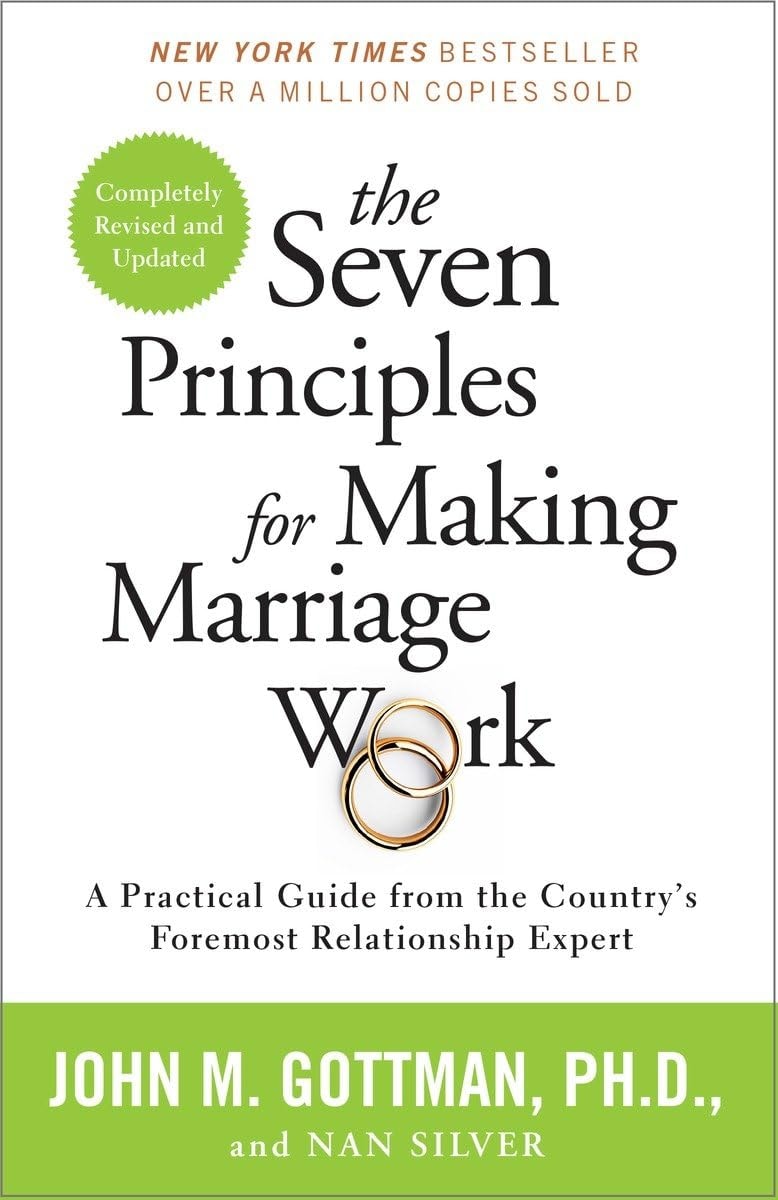
"The Seven Principles for Making Marriage Work" by John Gottman
• Explanation of the "Four Horsemen" of relationship apocalypse
The Four Horsemen of the Apocalypse: Gottman identifies four communication styles that can predict the end of a relationship:
Criticism
You criticize your partner's identity, personality, or any other issue or behavior that is personal to them.
Contempt
This horseman is one of the most dangerous. It involves disrespecting your partner and mocking them. The small acts of rolling your eyes and a disgusted tone of voice show contempt for your partner.
Defensiveness
Being defensive of your position in a situation. You try and show your partner where they are wrong rather than taking responsibility for the role you played.
Stonewalling
Give your partner a cold shoulder and close yourself off to interaction with them. This can initially be to protect yourself or hurt them the way they hurt you, but it is hard to get back to the place of intimacy you once had.
• 7 Key principles
The key principles for strengthening marital bonds and resolving conflicts are discussed in the book.
- Enhance Your Love Maps
- Nurture Your Fondness and Admiration
- Turn Toward Each Other Instead of Away
- Let Your Partner Influence You
- Solve Your Solvable Problems
- Overcome Gridlock
- Create Shared Meaning
NEW YORK TIMES BESTSELLER • Over a million copies sold! “An eminently practical guide to an emotionally intelligent—and long-lasting—marriage.”—Daniel Goleman, author of Emotional Intelligence
This is an Amazon Affiliate Link, I might earn from qualifying purchases.
"Nonviolent Communication" by Marshall B. Rosenberg
• Introduction to the concept of nonviolent communication
Nonviolent communication is taking control of your anger before it controls you. This concept can be implemented in any area of your life. One of the most powerful is with your partner. ‘Nonviolent Communication’ has been around for the past 40 years and is still going strong, why? Because it works.
• Techniques for expressing needs and feelings without blame
- Observation: State the facts without judgment or evaluation. Example: "I notice the dishes haven't been washed in three days" instead of "You never do the dishes!"
- Feelings: Express your emotions about the observation. Example: "I feel frustrated and overwhelmed"
- Needs: Identify the needs, values, or desires that create those feelings. Example: "I need a clean and organized living space to feel relaxed at home"
- Request: Ask for concrete actions to meet those needs. Example: "Would you be willing to wash the dishes today?"
• Strategies for active listening and empathetic understanding
- active listening can be summed up as, ‘listen to understand not to respond.’
- empathy is showing you care about how the other person feels even if you do not agree with them on the subject. Sometimes advice isn’t needed it is only a listening ear.
Living Nonviolent Communication: Practical Tools to Connect and Communicate Skillfully in Every Situation
This is an Amazon Affiliate Link, I might earn from qualifying purchases.
"The 5 Love Languages" by Gary Chapman
• Explanation of the five love languages concept
Does it feel like nobody loves you? Each person has a different way of experiencing and expressing love. You can have any one of the 5 love languages or even a combination of them all. If your partner or those around you don’t show you affection in how you feel loved, you might not know they love you.
- Words of Affirmation: Using words to affirm, appreciate, and encourage your partner.
- Acts of Service: Doing things you know your partner wants you to do.
- Receiving Gifts: Giving thoughtful presents as expressions of love and care.
- Quality Time: Giving your partner your undivided attention.
- Physical Touch: Expressing affection through physical contact.
• Practical tips for speaking your partner's love language
- Words of Affirmation: • Leave unexpected love notes • Compliment them sincerely and often • Express gratitude for things they do
- Acts of Service: • Take on a chore they usually do • Prepare their favorite meal • Offer to help with a project they're working on
- Receiving Gifts: • Give small, thoughtful presents regularly • Remember and celebrate important dates • Bring back souvenirs when you travel
- Quality Time: • Plan regular date nights • Put away phones during conversations • Take up a hobby together
- Physical Touch: • Hold hands more often • Offer massages after a long day • Increase non-sexual physical affection
The 5 Love Languages® is as practical as it is insightful. Updated to reflect the complexities of relationships today, this new edition reveals intrinsic truths and applies relevant, actionable wisdom in ways that work.
This is an Amazon Affiliate Link, I might earn from qualifying purchases.
"Crucial Conversations" by Kerry Patterson et al.
• Overview of the framework of the crucial conversation
Crucial conversations are conversations that are of great importance to either one or both partners. In these discussions, you talk about the things that are bothering you so you can find a middle ground.
• Techniques for having difficult discussions without escalating tension
To start with, you tell the other person you want to have a conversation with them. This prepares them that something important is going to be spoken about. If you are going to have the conversation at a later stage you might want to give the topic, but it isn't necessary. begin the conversation with how you are feeling and not pointing blame at the other person.
• Strategies for creating a safe space for open dialogue
Create an environment where both of you can share your feelings openly and without judgment. Having this safe space allows for the two of you to be open and honest with each other.
This New York Times bestseller and business classic has been fully updated for a world where skilled communication is more important than ever.
This is an Amazon Affiliate Link, I might earn from qualifying purchases.
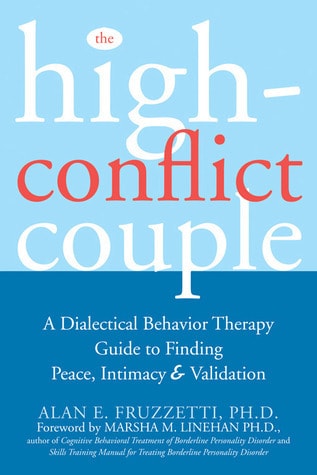
"The High-Conflict Couple" by Alan E. Fruzzetti
• Understanding the dynamics of high-conflict relationships
There are many techniques out there teaching how to deal with conflict in your relationship. If you have tried any of these without any success then you might be in a High-Conflict relationship. This is where both of you are easily angered and quick to argue. You have to first attend to the anger and get it under control, then you can work on your relationship together.
• Dialectical Behavior Therapy (DBT) skills for managing emotions
Using mindfulness and distress tolerance techniques DBT can help you get your flaring emotions under control.
You hear and read a lot about ways to improve your relationship. But if you've tried these without much success, you're not alone. Many highly reactive couples—pairs are quick to argue, anger, and blame—need more than just run-of-the-mill relationship advice to solve their problems in love.
This is an Amazon Affiliate Link, I might earn from qualifying purchases.
Hi, I am Charisse Swart
Greetings, lovely readers! I am delighted to connect with you through the shared spaces of our digital world. As a dedicated homemaker, my days are woven with the threads of familial love, nurturing, and the subtle art of creating a haven within the walls of our humble abode.
While I occasionally attempt to don the cloak of logic, my dear husband often lovingly nudges me back to the realm of my true nature - that of a relational soul. You see, I possess a heart that thrives on connections, cherishing the intricate tapestry of relationships that grace our lives.
My journey is fueled by an unwavering passion for fostering flourishing bonds between people. There's an innate joy that blooms within me when I witness the beauty of heartfelt connections, the kind that endure the tests of time and adversity.
Yet, amidst the beauty, there exists a poignant ache within me when I see marriages falter, falling short of their boundless potential. It is this very longing for the realization of every relationship's full splendor that propels me forward, seeking understanding, insight, and perhaps, a touch of wisdom to share along the way.
Thank you for joining me on this adventure. May our shared exploration illuminate the path toward deeper understanding, compassion, and the boundless possibilities that lie within the embrace of genuine relationships.


